If you run an aggregate, quarry, or cement operation, you have probably heard two contradictory things about the MSHA silica rule: that it is the biggest compliance change in decades, and that it is on hold. Both are true. Here is where things actually stand, and why the smart move is to keep preparing anyway.
What the rule requires
MSHA finalized its respirable crystalline silica rule in 2024 under 30 CFR Part 60. The core of it is simple to state:
- A uniform permissible exposure limit (PEL) of 50 micrograms per cubic meter of air, measured as an 8-hour time-weighted average. That applies to all mines — coal, metal, and nonmetal alike.
- An action level of 25 µg/m³. Cross that threshold and you owe periodic exposure monitoring, even if you are under the PEL.
- Exposure monitoring requirements, so operators have to actually sample and know their numbers rather than assume.
- Medical surveillance for miners at metal and nonmetal operations — the kind of program coal operators have long been familiar with.
For metal and nonmetal mines — which is most of the aggregate, sand and gravel, and cement world — the compliance date was April 8, 2026.
The legal limbo
That date came and went without enforcement. In April 2025, the Eighth Circuit Court of Appeals stayed the compliance deadline for the metal/nonmetal sector while legal challenges to the rule play out. As of mid-2026, the stay is still in effect and compliance remains delayed pending judicial review.
What happens next is genuinely uncertain. The court could uphold the rule as written, send parts of it back to MSHA, or strike it down. Nobody — including the trade associations and the agency — can tell you the date the clock restarts, or whether the final version will look exactly like the 2024 rule.
So the honest answer to “where does the rule stand?” is: written, final, and paused.
Why waiting is a bad bet
It is tempting to read a court stay as a reprieve and move silica down the priority list. Three reasons that is a mistake.
OSHA is already enforcing the same numbers. The OSHA general industry silica standard, 29 CFR 1910.1053, sets the same 50 µg/m³ PEL and 25 µg/m³ action level, and it is fully in force. If you operate a ready-mix plant, an asphalt plant, a block plant, or any facility under OSHA jurisdiction rather than MSHA, the stay does nothing for you. Many companies run both kinds of sites. Building your dust program to one standard across the whole operation is simpler than maintaining two.
Engineering controls take lead time. A dust collector is not an overnight purchase. Between sampling, system design, budgeting, procurement, fabrication, installation, and commissioning, a meaningful dust control project routinely takes many months. If the stay lifts and MSHA sets a new compliance date, operators who waited will be competing for the same equipment vendors and installers at the same time. Operators who started early will already be done.
The health liability does not pause. Silicosis is progressive and irreversible, and the exposures your crews take today are on your books regardless of what the Eighth Circuit decides. Between the Mine Act’s general obligations and plain workers’ compensation exposure, overexposing people while a known health rule sits in limbo is a hard position to defend later.
There is also a practical point: the 50 µg/m³ PEL is very unlikely to get looser. Whatever the litigation produces, the direction of travel on silica has been one way for decades. Controls you install now will not be wasted.
A practical prep list for aggregate and quarry operators
You do not need to build a full Part 60 program tomorrow. You do need to know your exposures and start closing the worst gaps. A reasonable sequence:
1. Baseline sampling. Get personal exposure sampling done for your highest-risk jobs — crusher operators, screen deck laborers, baghouse techs, loadout, plant cleanup. Use an accredited lab and a qualified hygienist. You cannot manage what you have not measured, and baseline data also protects you: if your numbers are already under the action level, document it and re-check periodically.
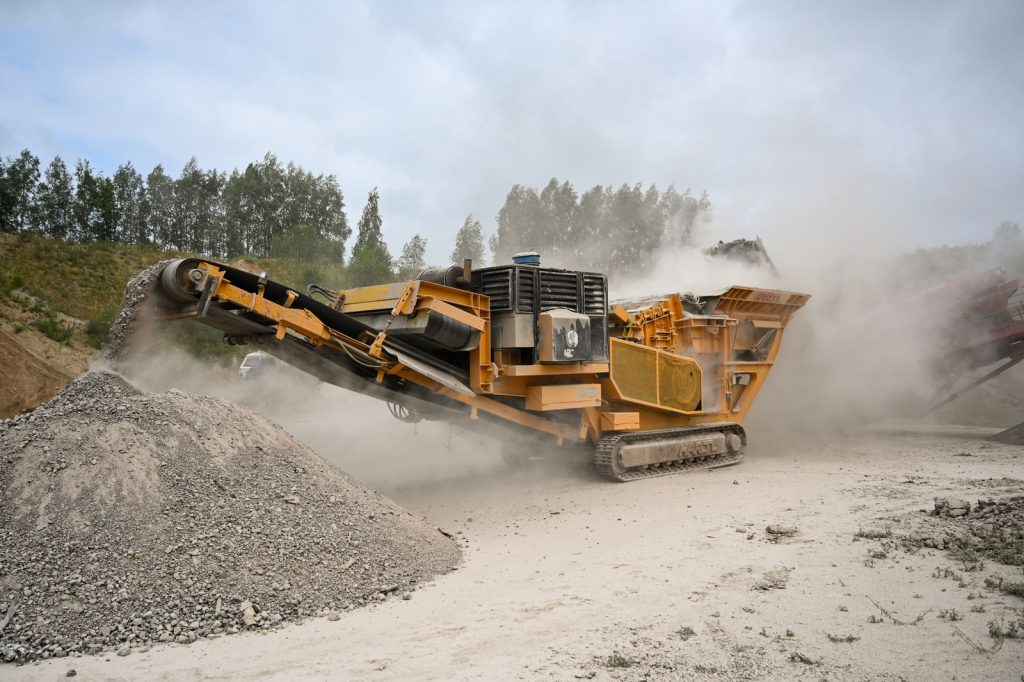
2. Build a dust source inventory. Walk the plant and list every point that generates visible dust: crusher discharges, transfer points, screen decks, conveyor loading zones, truck dumps, stockpile drops, loadout spouts. Rank them by how close people work to each one. Visible dust is not a measurement, but it tells you where to sample and where the fixes are.
3. Engineering controls first. Both OSHA and the MSHA rule are built around a hierarchy of controls, and respirators are the last resort, not the plan. The controls that move the needle at aggregate plants are well understood:
- Seal and skirt conveyor transfer points so dust stays in the material stream.
- Add or repair dust collection at crushers, screens, and loadout.
- Fix the baghouse you already own — a collector with blinded bags or leaking cans is a line item on your books doing nothing for your air.
- Use enclosed, pressurized, filtered operator cabs where practical.
- Replace dry sweeping and compressed-air cleanup with vacuuming or wet methods.
4. Line up medical surveillance. For metal/nonmetal operators, the rule adds medical exams. Occupational medicine providers with experience in miner exams are not on every corner. Identifying a provider and understanding the cost now is cheap insurance.
5. Write it down. Sampling results, the source inventory, the control projects and their timelines. If MSHA restarts the clock, a documented program in progress puts you in a very different conversation with an inspector than a blank page.
The bottom line
The MSHA silica rule is stayed, not dead. OSHA’s identical limits are enforced today. And the fixes — mostly conveyor sealing and dust collection done right — take longer to build than a court decision takes to land. Operators who treat the stay as planning time, not free time, will be ready either way.
If you want a second set of eyes on your dust sources, The ACT Group in Fontana has spent more than 30 years helping Southern California aggregate, cement, and mining plants control dust at the source — from conveyor transfer point systems to complete dust collection design and baghouse service. Reach out and we will walk your plant with you and help you build a prioritized plan.