INDUSTRIAL PARTS
Grade 1, Grade 2, and heat-resistant belting — over 20,000 feet stocked in our Fontana warehouse, spliced and installed by our own MSHA & OSHA trained crews.
Heavy-duty rubber belting for aggregate, cement and mining conveyors. Stocked at 14644 El Molino St. in Fontana, California — same-day pickup for the Inland Empire, Los Angeles, Orange County and San Diego, and shipping across Nevada, Arizona and the West Coast.
Request Pricing All PartsWe carry a full line of Spectrum Belting — Grade 2, Grade 1, and heat-resistant compounds across a wide variety of carcass types — with more than 30 rolls of the industry’s most commonly used belting on the floor in Fontana at any given time. When a belt lets go at 2 AM, the difference between stock and a mill order is your whole week.
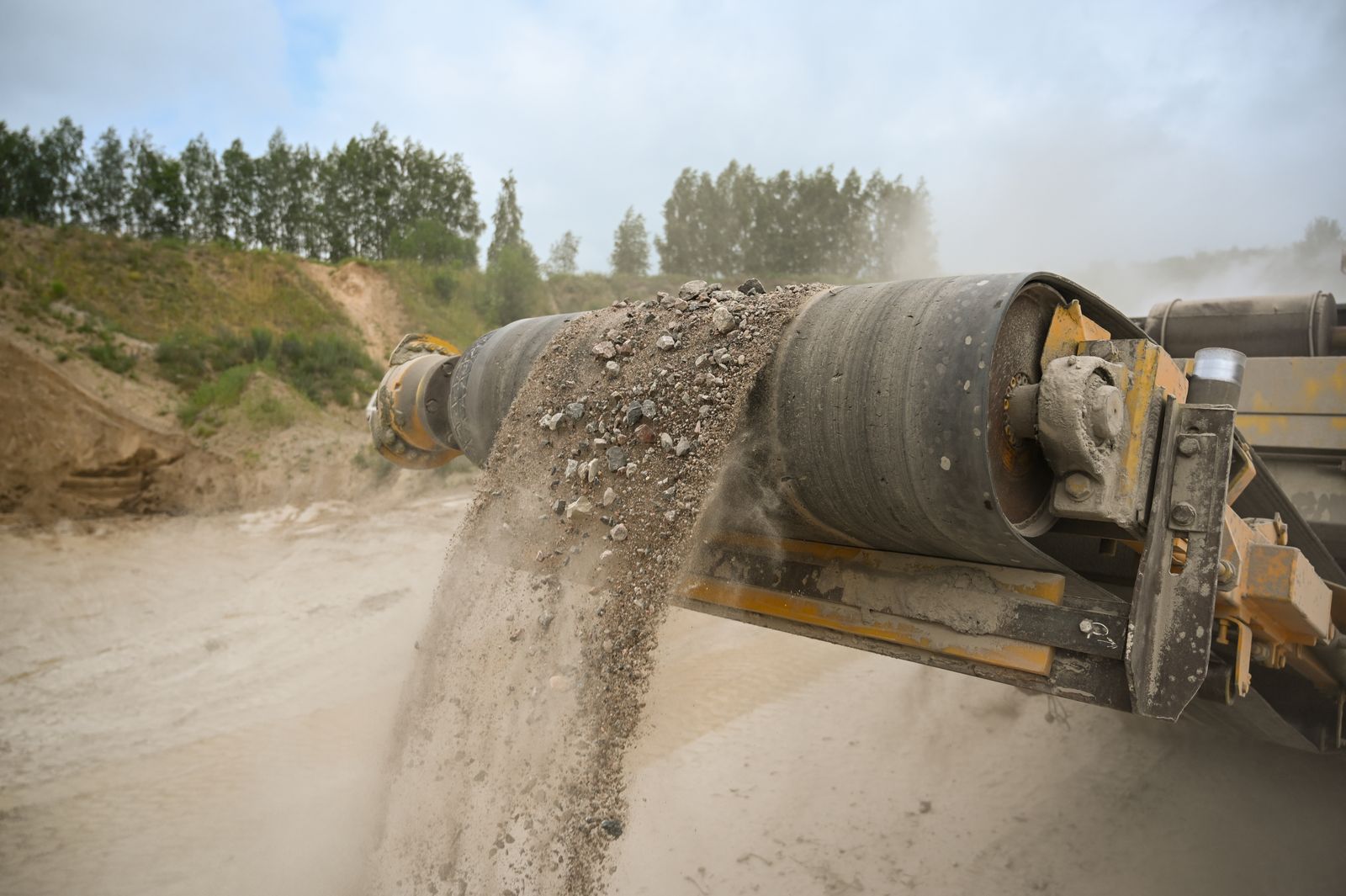
Cover grades come from the RMA/ARPM standard, and they measure the rubber cover — not the carcass:
| Property | Grade 1 | Grade 2 |
|---|---|---|
| Cover tensile strength | 17 MPa (~2,465 psi) | 14 MPa (~2,032 psi) |
| Max abrasion loss | 150 mm³ | 200 mm³ |
| Built for | Cutting & gouging: sharp ore, quartz, granite, riprap, scrap | Abrasion: sand & gravel, limestone, coal, slag, cement rock |
Rule of thumb: if your material cuts and gouges, spend up on Grade 1. If it grinds and polishes, a quality Grade 2 handles most materials in the 50–120 lb/ft³ range at a better price. For hot materials — clinker, coke, foundry sand, sintered ore — heat-resistant compounds are rated by continuous material temperature, from around 212°F service up to specialty compounds for 350°F+; tell us your actual material temps and we’ll spec the class.
The covers protect; the carcass carries the load. Most plant belts are multiple-ply fabric (modern EP polyester/nylon weaves in fewer, stronger plies); straight-warp constructions add rip and impact resistance; steel-cord belting takes over when tensions climb beyond fabric range. Belts are specced by PIW — rated tension in pounds per inch of width — plus ply count, width, top and bottom cover thickness, and cover grade. A typical call-out reads like 375/3/48, 3/16” × 1/16”, Grade 2. Don’t have the spec sheet? Bring us the application — length, lift, capacity, material — and we’ll build the spec with you.
A belt is only as good as its splice. Our crews perform hot vulcanized splicing on-site — a properly vulcanized splice approaches the strength of the original belt with no snag points. When vulcanizing isn’t practical — emergency repairs, wet weather, damaged belt ends, no room for a press — we install the MLT Super-Screw®: a patented flexible rubber splice that screws into the belt with self-drilling screws and a standard drill. No template, no special tools, any weather, and the conveyor can be back up within about an hour. It’s leak-proof, compatible with belt cleaners and small pulleys, covers ratings from roughly 200 to 1,200+ PIW, and comes in MSHA-accepted fire-resistant/anti-static versions. For rips and holes, MLT’s Fix’N Go® screw-on patches make permanent repairs without pulling the belt.
Honest answer, every time: a relatively new belt with minor damage gets repaired; a belt with long-term wear that can no longer meet the demands of the application gets replaced — and sometimes a stocked belt gets you running faster than a repair would. Ask about The Works (repair plus performance monitoring) and our Pull & Splice packages. One storage tip that saves belts: store rolls upright on a stand, off the ground, covered and away from sun and ozone sources, and rotate the roll every 90 days.
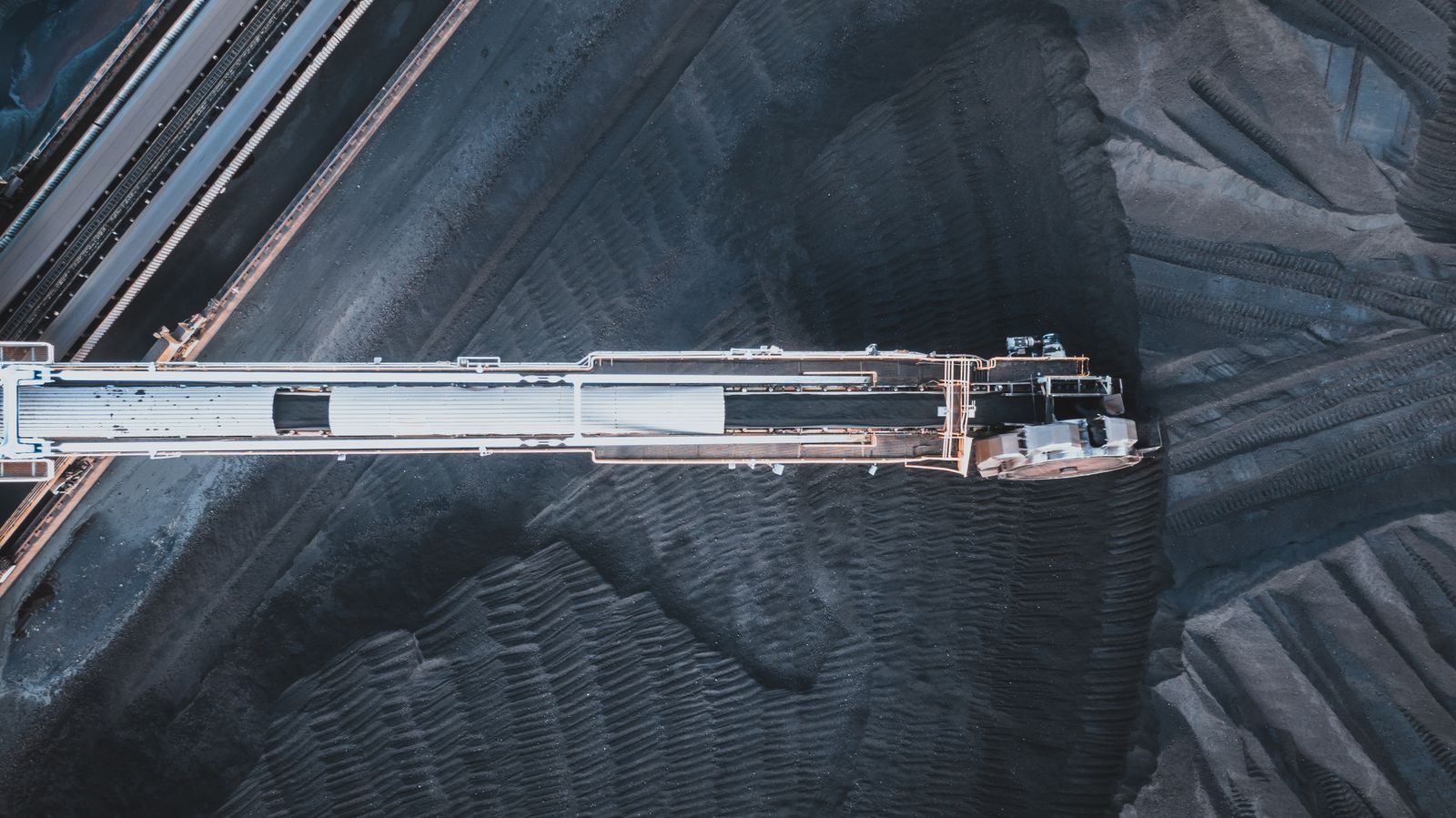
The biggest wear part on your conveyor — spec it right
BELT + SPLICE + INSTALL
One vendor, one call, one crew — from the roll to the running belt
Request Pricing Vulcanizing & Splicing(909) 350-4703 — or (888) 480-0680 toll-free.
Applied Conveyor Technology — bulk material handling experts. Dust control, conveyor services, silo cleaning, parts, and engineering.
909-350-4703
888-480-0680 (toll-free)
© 2026 The ACT Group (Applied Conveyor Technology). All rights reserved.
Service Areas
Silo Cleaning: Inland Empire · Los Angeles · Central Valley · Nevada
Dust Collection: Inland Empire · Los Angeles
Belt Vulcanizing: Los Angeles · Nevada