
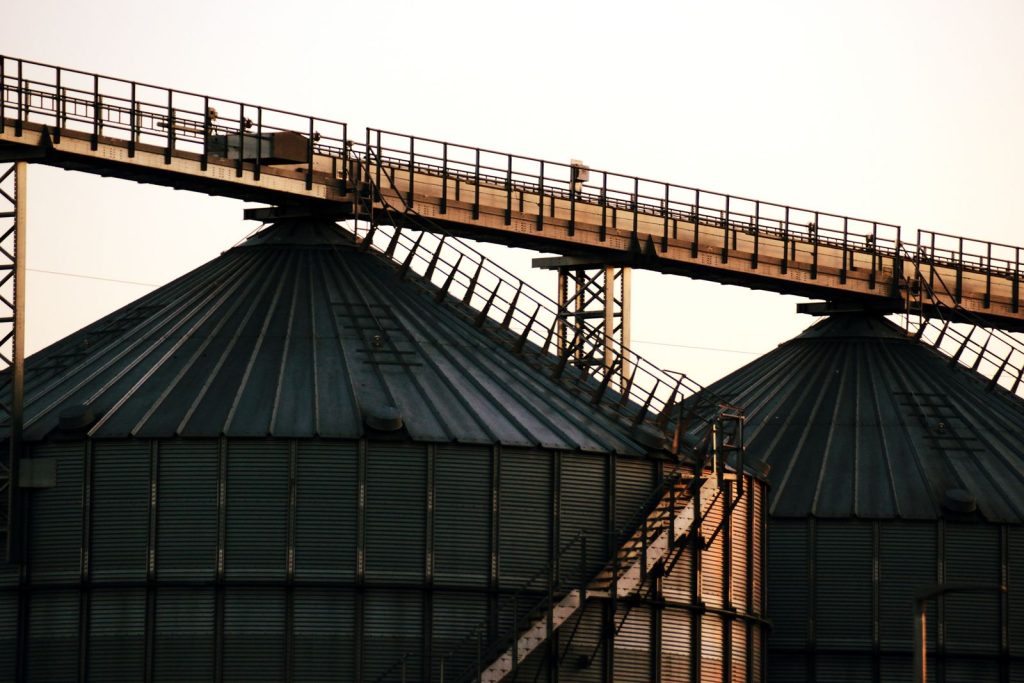
After enough silo cleanings, you stop being surprised by what comes off the walls. The plants are always surprised, though — because from the outside, a silo tells you almost nothing. The level sensor says one thing, the scale tickets say another, and the truth is somewhere behind a manway nobody has opened in years.
These are the things we find most often. Every scenario below is a composite of typical jobs — no names, no specific plants — but if you run bulk storage, at least one of them will sound familiar.
Wall buildup that ate the capacity
The most common finding, and the least dramatic until you measure it. A cement or fly ash silo that has run for years without cleaning will typically carry hardened material on the walls — sometimes a few inches, sometimes several feet thick in the lower third where moisture and pressure do their work.
At a ready-mix plant we serviced, a typical scenario: the silo was “full” by the level reading, but the plant kept running short before the next delivery. Once the whip work started, the reason came down in sheets. A vessel that was bought to hold a full truckload buffer had quietly become a much smaller one, with the difference welded to the walls as rock-hard buildup.
What it means for the plant: you’re paying for storage you don’t have. Deliveries get more frequent, freight gets less efficient, and the buffer that’s supposed to carry you through a supplier hiccup isn’t there. The fix restores capacity you already own — nobody has to buy a bigger silo.
Ratholes that lie to the level sensor
In funnel-flow silos, material discharges down a channel above the outlet while everything around the channel stands still. Given time and moisture, the stagnant ring hardens into a permanent structure — a rathole — and the silo becomes a pipe surrounded by dead material.
The tell is inventory drift. The level sensor is honest; it just measures the top of whatever is under it, and what’s under it is a crust of old, stagnant material. Meanwhile the live column empties fast. Operators learn the silo “runs out early” and start padding orders, and the accounting side wonders why the book inventory never matches physical.
On cleanouts, the stagnant ring often turns out to be old material — months old, sometimes visibly different in color and condition from fresh product. If the material has a shelf life or a spec, that ring is a quality problem waiting to re-enter the process when a chunk finally lets go.
Bridges hardened above the outlet
Bridging is the finding that comes with a phone call attached, because it stops production. Hardened material arches across the cone above the outlet, strong enough to hold back everything above it. The silo may hold hundreds of tons and discharge nothing.
A typical scenario from an aggregate operation: a fines silo bridged after a wet stretch, and the crew had been fighting it with air lances and hammers for a shift before calling. From the top, a boring system cut a pilot column down through the blockage to re-establish flow — no one inside the vessel — and then whip cleaning took the walls and cone back to bare steel.
Worth saying plainly: a bridge is exactly the situation where someone gets tempted to enter the silo or stand on the material to break it loose. The material under a bridge can be a void; the crust that looks solid is the ceiling of that void. This is the engulfment scenario OSHA’s confined space standard (29 CFR 1910.146) exists for. No-entry methods are not just safer, they’re faster.
Foreign objects
Silos collect things. Over the years we’ve pulled out the predictable — chunks of hardened material the size of furniture, failed liner sections, lengths of old air pad hose — and the less predictable: tools dropped through roof openings, pieces of a broken fill-pipe target plate, hardware from a level sensor that “went missing” two seasons ago, remnants of a bird’s nest from an unscreened vent.
What it means: every one of those objects was on its way to the outlet, the rotary valve, the screw conveyor, or the batch plant below. Some of them explain damage the plant had already paid for without knowing the cause. A cleanout is also a recovery operation for whatever fell in.
Corrosion and wear hiding behind the buildup
This is the finding that matters most and gets discovered last, because you cannot inspect a wall you cannot see. Buildup holds moisture against steel, and moist stored material — especially anything with chlorides or a chemistry that turns corrosive when damp — works on the shell year after year.
On a typical cleanout, once the walls are bare, the picture is finally honest: pitting at the cone weld seams, thinned plate where a rathole held wet material against one section for years, worn or missing liner in the impact zone under the fill point. Sometimes the news is good and the vessel is sound. Either way, the plant finally knows — and a cleanout is the only time an engineer can actually evaluate the structure.
Why inventory drifts from reality
Almost every finding above shows up first as an inventory problem. Buildup shrinks true capacity, so “full” means less than it used to. Ratholes hide dead stock the sensor counts as live. Bridges hold material the outlet can’t reach. The drift between book inventory and physical inventory isn’t an accounting failure — it’s the silo telling you what’s inside it, in the only language it has.
If your counts have stopped reconciling, the material is telling you something. Treat the cleanout as an audit: you get the capacity back, you get a real look at the structure, and your level readings mean something again.
The ACT Group in Fontana has performed silo and bin cleanouts across Southern California’s cement, ready-mix, aggregate, and manufacturing plants for over three decades, using no-entry whip and boring methods. If you’d like to know what’s actually inside one of your vessels, we’re a phone call away.
Ready for a quote? Tell us about your vessel with the Silo Solutions Data Form — dimensions, material, and the problem you’re seeing — and we’ll price it with no obligation. Prefer paper? Download the printable PDF.