|
The Material Handler · No. 1 · October 2026
|
|
This is the first issue of The Material Handler, a short monthly from the shop in Fontana. Each issue has the same four things: what is on the calendar for plants like yours, one job from the field told straight, one guide from the Stockpile worth your time, and one thing on our shelf you should know is there. No filler. If it takes you more than five minutes, we wrote too much.
October is when Southern California plants find out whether they are ready for rain. Most are not, and it shows up first on the conveyors.
— Franc Sunseri · The ACT Group
|
| |
| |
On the calendar
Rainy season starts on the return side of the belt
The first real storm does three things at once: wet fines stick to the belt and ride past the cleaners, the carryback drops on return idlers and builds up until the belt walks, and the wet pile under the head pulley becomes a slip hazard nobody logged. Dry weather hid all three. The fix list before the first storm is short: cleaner blades with real tension, return idlers that turn by hand, skirting that seals at the load zone, and drainage under the transfer points.
Two compliance notes while you are out there. Santa Ana wind season overlaps the first rains, and SCAQMD Rule 403 still expects stockpiles and open areas to be controlled on high-wind days. And wet-weather slips, trips and falls are the most common recordable in bulk plants between now and March, so walkways under conveyors deserve the same attention as the belt.
|
|
| |
|
From the field
An emergency splice in the pouring rain at Lebec
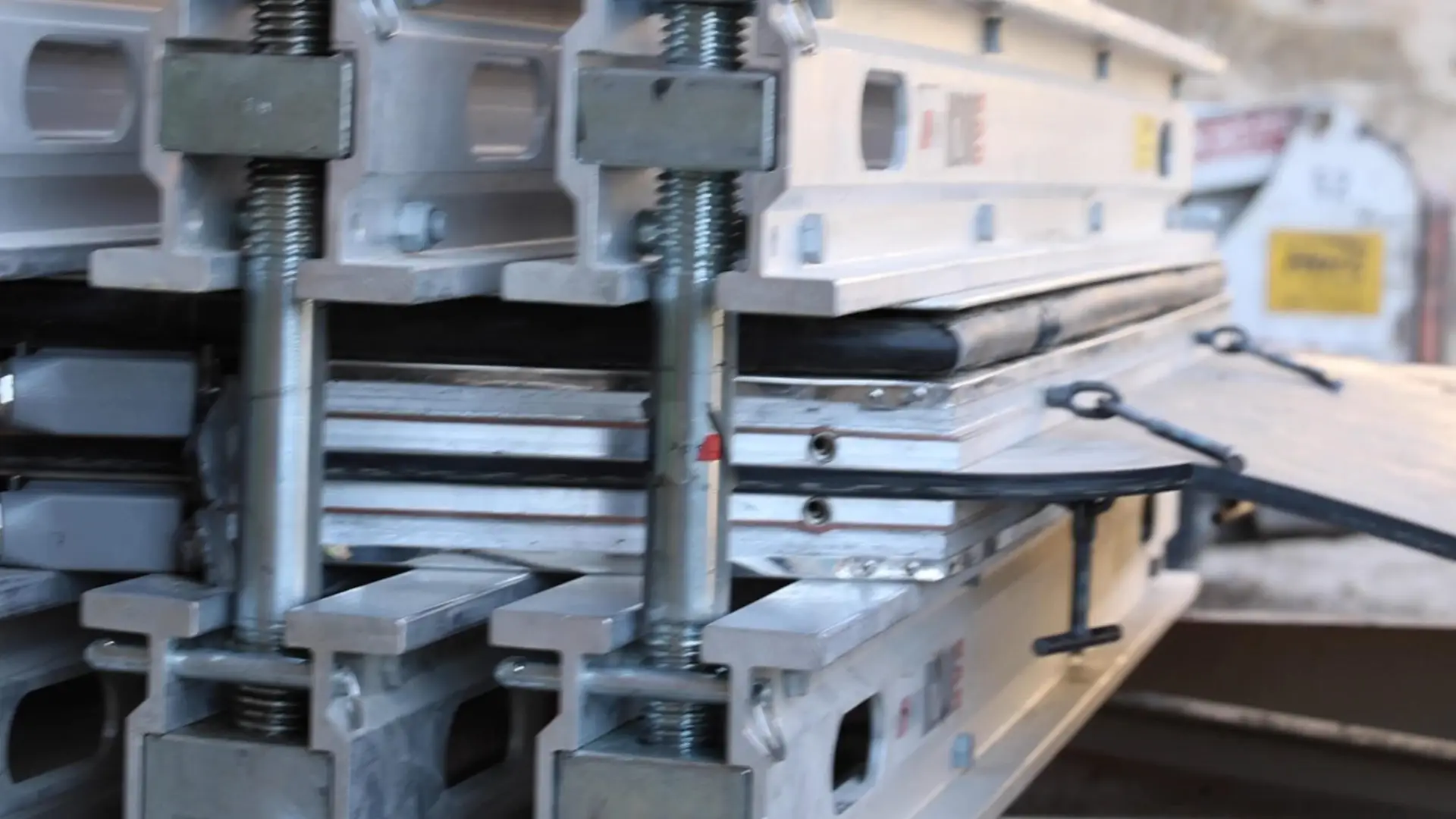
A vulcanizing press on a planned splice. The emergency ones look nothing like this.
National Cement in Lebec gets both kinds of splice from us. The planned kind: a belt scheduled for vulcanization, press set, splice cured, belt back in service on the timeline the plant wrote down. And the other kind: a belt down, the plant waiting on it, and a mechanical super-screw splice put in while it is raining sideways because that is when belts fail.
The reason both kinds work is not the press, although we buy the best ones we can find and built a custom trailer for pulling big belts. It is that the plant tells us directly what it needs and we show up with it. No runaround, no second vendor, no waiting for the weather. That is the whole relationship.
|
| |
|
Dig in · The Stockpile
Conveyor Belt Care: splicing, tracking and carryback, in one guide
Why belts mistrack, what carryback actually costs, when a vulcanized splice beats a mechanical one, and the thirty-minute walk-down any plant can do before the rain. Free reading, no forms.
|
|
| |
|
On the shelf
Spectrum™ belting, on the shelf in Fontana
When a belt rips in November you do not want to hear a four-week lead time. We stock more than 20,000 feet of Spectrum belting in the common widths and covers, cut it to length, and send the same crew that splices it. One call, one truck.
If you have a belt you are nursing through the season, tell us the width, ply and length now. Reserving a roll costs nothing.
|
|
20,000+
Feet of belting in stock
| Rolls on hand |
24+ |
| Widths vulcanized |
18–60 in. |
| Emergency crews |
24/7 |
| Shop |
18,000 sq/ft |
|
|
|
| |
| |
Toolbox talk
Wet steel, grating and a pile of carryback under the head pulley: the recordable this winter will not be a belt injury. It will be a fall.
|
|
| |
|
Tell us the plant, the part and the problem.
|
|
|
The ACT Group · Applied Conveyor Technology, Inc. · 14644 El Molino St., Fontana, CA 92335
T: (888) 480-0680 · F: (909) 350-4982 · E: sales@groupactinc.com · groupact.com · Since 1991 · CA Lic. #700731 · NV Lic. #0072789
Want The Material Handler in your inbox each month? There is a newsletter box at the bottom of every page on groupact.com, or email us and we will add you. Past issues → |
|
|